
VFW At Work
-
Humana, CenterWell and USAA Unite with VFW for National Day of Service
LOUISVILLE, Ky. -Humana Inc. and the Veterans of Foreign Wars (VFW), in collaboration with USAA, CenterWell and Volunteers of America (VOA), will bring together employees, veteran advocates and community partners on May 19 to support veterans experiencing homelessness.
As part of the VFW's annual Day of Service, volunteers will unite in three different locations - Nashville, Tennessee; San Antonio, Texas; and Tampa, Florida - for hands-on service projects that deliver tangible support to veterans and seniors in need. Collectively, volunteers at the three locations will prepare 4,000 essential care kits to be distributed through trusted community partners.
"Veterans deserve more than our gratitude. They deserve action, partnership and sustained support," said Cara Brown, Director of Key Relationships at Humana. "By joining forces in communities across the country, we're creating meaningful opportunities for our employees and partners to serve with purpose while delivering real, measurable impact for veterans in need."
Three Cities, One Mission
The Day of Service events, taking place at local CenterWell Senior Primary Care and Conviva Senior Primary Care centers, will include:- Nashville, Tennessee: Volunteers will assemble 2,000 care kits in support of Volunteers of America's street outreach efforts, helping individuals experiencing homelessness connect with person-centered case management, resource navigation and material support.
- San Antonio, Texas: Volunteers will pack 1,000 toiletry kits for seniors, supporting dignity and daily health needs in a community with one of the nation's largest veteran populations.
- Tampa, Florida: Volunteers will prepare 1,000 toiletry kits for local veterans experiencing housing insecurity, in partnership with community organizations serving the region's growing veteran population.
"Our Day of Service projects reflect the heart of the VFW's mission - veterans helping veterans," said VFW National Commander Carol Whitmore. "Our relationship with Humana, USAA and CenterWell demonstrates what's possible when organizations come together with shared values of honor, service and community to ensure no veteran is forgotten."
Building Toward a National Impact Moment
This year's collaboration marks a new partnership with Volunteers of America, ensuring service efforts are aligned with real-time community needs and reaching veterans and seniors most at risk. Together, the organizations aim to create momentum throughout the year - engaging local markets nationwide, strengthening relationships with local VFW Posts and its Auxiliaries, and inspiring continued involvement beyond a single day of service."Our goal is not just a day of volunteering, but a sustained commitment," Brown added. "By working alongside VFW Posts, veteran advocates and organizations like Volunteers of America, we're helping build healthier futures for those who have served - today and for years to come."
The 2026 Day of Service builds on the VFW's growing national movement of service. Since launching the Day of Service in 2022 as an extension of the VFW's Still Serving campaign, participation has expanded dramatically. In 2025 alone, more than 2,300 service events were held across the United States and internationally, underscoring the power of community-driven action.
###
About Humana
Humana (NYSE: HUM) is a leading U.S. healthcare company. Through our Humana insurance services and our CenterWell healthcare services, we strive to make it easier for the millions of people we serve to achieve their best health - delivering the care and service they need, when they need it. These efforts are leading to a better quality of life for people with Medicare and Medicaid, families, individuals, military service personnel, and communities at large. Learn more about what we offer at Humana.com and at CenterWell.com. -
'When You Have Cancer You Think the Worst'
Like so many of the men he served alongside, Norm Brown enlisted in the U.S. military to give back and do something meaningful. But unlike most of them, he was not an American. Brown, 83, is from Niagara Falls, Ontario, Canada.
"When we got out of high school in 1961, me and my two friends were interested in joining the Marines," he said. "Their parents intervened, so they didn't end up doing it, but I went over to New York and enlisted."
When asked if he was bothered by his friends backing out or whether he had reservations about serving and sacrificing for a country other than his own, Brown said: "No, the relationship between our two countries was fantastic. To me, it was the right thing to do."
As it turned out, when Brown arrived at boot camp at Parris Island in South Carolina, he met two other Canadian recruits. The three built a special bond before shipping out to their next destinations.
Brown went on to serve for three years, including a deployment to Vietnam. Afterward, he returned to Canada, where he married Linda, who is now his wife of 54 years.
Condition Takes a Turn for the Worse
Decades passed without issue, until 2011, when Brown was diagnosed with monoclonal gammopathy of undetermined significance (MGUS), a benign blood disorder that can lead to different cancers.
His doctors suggested the "watch and wait" approach. Brown completed bloodwork every six months to ensure his condition had not progressed. But in 2019, it did. A biopsy revealed Brown had a type of non-Hodgkin lymphoma called Waldenstrom macroglobulinemia (WM).
Brown underwent chemotherapy and is managing his cancer today. A couple of years ago, he remembered reading about the PACT Act and discovering that WM was now considered a presumptive condition.
Brown contacted the VA to see if he could receive compensation, but he struggled to verify his service records.
"I couldn't get them to prove I had been in Vietnam," he said. "I have the service medals that I could have earned only there, but it didn't seem to matter."
Eventually, someone suggested Brown reach out to the VFW for help.
"So," he explained, "I contacted them. Fortunate for me, I got a call back from Norm Machelor. Once he got involved, everything moved quite smoothly."
'I'm Not Sure I Ever Would Have Been Able to Do It on My Own'
Machelor, a VFW Accredited Service Officer, worked with the VA to confirm Brown's service in Vietnam. He then helped Brown arrange the necessary doctor's appointments before completing his claim.
"It had been quite frustrating trying to get all the information myself. I'm not sure I ever would have been able to do it on my own," Brown said. "But before long, I got the letter in the mail saying that my claim was accepted, and I was going to get compensation."
Brown's service history as a Canadian may be unique, but he knows his experience with the VA is not. He encourages other veterans to work with a VFW Accredited Service Officer like Machelor.
"When someone tells you that you have cancer, obviously, you think the worst right away. But with the support I've gotten from Norm and the VFW, I feel good," he said.
"With Norm's great assistance, it all worked out. I'm very, very fortunate. If you have any kind of issue like mine, contact the VFW for help."
Learn more about the VFW's National Veterans Service (NVS) program.
-
Honoring Vietnam Veterans
On March 27, VFW Post 1647 in Brainerd, Minnesota, hosted its fifth annual Vietnam Veterans Day Celebration. There was standing room only at dinner, as more than 100 Vietnam veterans and their significant others came for the camaraderie and free refreshments.
The local Daughters of the American Revolution served apple pie and ice cream, while the Post provided dinner.
Vietnam veterans are often distinguished from veterans due to the combination of societal hostility, isolation during their return, and the unprecedented psychological toll of an unconventional conflict.
Unlike the "Greatest Generation" of World War II, who returned to a unified nation celebrating victory, Vietnam veterans returned to a country deeply divided over the war's morality and its conclusion. Many vets feel that the Vietnam War was a withdrawal of U.S. forces due entirely to political decisions based on citizen opposition and unrest, not to the failure of our military.
Due to the negative public perception, many veterans suppressed their experiences for decades, avoiding treatment and feeling like outsiders even within traditional veteran organizations.
One Vietnam vet in attendance was Buford Johnson. He was sent to Vietnam as an ROTC officer at his own request in 1964 and retired in 1986 as a Lt. Colonel in the Army Reserve.
Johnson served as an advisor to the Vietnamese combat unit in Vietnam's Central Highlands and often came under enemy fire. He recounted how a severely wounded soldier survived after he and a helicopter pilot heroically made a landing to rescue the soldier and fly him to safety.
Johnson came back to the States, wounded, and spent some time in an Army hospital. He was then assigned to Fort Benning, Gorgia. When asked how he felt now about his wartime experience, he responded, "It gave me a better understanding of human nature."
Another vet attending the celebration was Brainerd resident, Ron Schrimshaw, who was drafted and sent to Vietnam at age 20.
Scrimshaw repaired helicopter armament systems. He served in Pleiku as an E4 and returned home after serving there a year. When asked if his war experience made him a bitter or better man, he responded, "bitter."
When he returned home, Scrimshaw's family was very supportive, but he felt rejected by the community. His biggest rejection was from the WWII veterans at the local American Legion who did not want him as a member.
The VFW leadership collaborates with government officials in St. Paul, Minnesota, and in Washington, D.C., to advocate for legislation that supports veterans in their struggle to regain and maintain a healthy lifestyle as they transition back to civilian life.
This article is featured in the 2026 April issue of Checkpoint. If you're a VFW member and don't currently receive the VFW Checkpoint, please contact VFW magazine at magazine@vfw.org.
Edited for length and style, this article was written by VFW Post 1647 Auxiliary member Sue Sterling.
-
'There's a Community Behind Us'
If Ekow Aidoo, 40, could give his fellow veterans one piece of advice, it would be this: "Don't wait for the 'perfect time.'"
Instead, Aidoo believes in taking action to set yourself up for success, just as he did when he joined the military to build better skills and habits.
"I wanted a purposeful career grounded in discipline and service," he said.
After serving in the Army National Guard and Air Force, Aidoo learned about the VFW's "Sport Clips Help A Hero Scholarship." Recognizing it as another opportunity to better himself, Aidoo applied. He is grateful for the financial assistance.
"To everyone who made this scholarship possible," Aidoo said, "thank you for investing in my growth and for believing in veterans' potential to keep serving our communities and our country."
Aidoo is pursuing his Master of Business Administration degree in information technology management. He explained that receiving the scholarship provided a sense of support and encouragement because it meant that others believed in him. He wants to motivate other veterans in the same way.
"Use the discipline you gained in service to push through the challenges of school. Take advantage of the benefits you've earned, ask for help and stay consistent. Education opens doors long after the uniform comes off."
Aidoo acknowledges that going to school can be difficult. But he insists that veterans are equipped to succeed.
"If there's one thing that other veterans take from my story, I hope it's that it's never too late to grow or start something new. The military taught us resilience, adaptability and how to learn under pressure. Those skills translate directly to your education," he said.
"I'm still trying to balance service, family and school, but opportunities like this scholarship remind me that I'm not doing it alone. There's a community behind us that believes in our potential."
Learn more about the VFW's "Sport Clips Help A Hero Scholarship."
-
'This Is More Than Paperwork'
Growing up in foster care as a child, Stefani Stephens didn't have a lot of stability in her life. After a divorce and being the mom of two young children, she was looking for security.
Stephens says she had "always felt an affinity for the military," and at age 23, she joined the U.S. Army.
A deployment to Iraq and tours in Korea equipped Stephens for more than just her duties as a movement control specialist.
"These experiences shaped my resilience, discipline and commitment to service," Stephens, 49, said.
In fact, those skills and passion are now beneficial for her current role as a VFW Accredited Service Officer.
In her daily work, Stephens says, "I advocate for veterans and their families by guiding them through the VA claims and appeals process, ensuring they receive the benefits they have earned."
Before working for the VFW, she spent a year living in Mexico, reflecting on doing work that "truly mattered," she explained. In an unexpected but significant way, this prompted her to approach the opportunity to help veterans.
"I walked into the VSO office at the Tucson VA hospital and said, 'I want to work here,'" she said.
After serving as a volunteer for six weeks, she secured an interview and was hired the same day.
"Helping veterans gives me a deep sense of purpose," she said. "Everything I have lived - my military service, personal challenges, overseas work and healing work - led naturally to this role. Supporting veterans feels like the work I was always meant to do."
Stephens insisted that while it's ultimately rewarding, her job can also be demanding at times.
"The biggest challenge is carrying the emotional weight of the stories veterans share," she said. "Many carry decades of trauma or frustration. Balancing empathy with a high caseload is difficult, but being someone they trust makes it meaningful."
She cites an example of a situation she faced while helping a Vietnam veteran who'd lived with survivor's guilt for many years.
"As we built his claim, he began opening up about things he had never spoken aloud," she said. "Watching him find even a small measure of peace - and seeing how being understood can heal - reminded me that this work is far more than paperwork. It is about restoring dignity, humanity and hope."
Learn more about the VFW's National Veterans Service (NVS) program.
- You are here:
-
Home

-
News Feeds
-
Veterans of Foregin Wars
- VFW At Work
Subscribe to Newsletter
Send an email to the Post to subscribe to the newsletter. You will receive it via email and no longer receive a copy in the mail. Note: If you do not subscribe, you will not continue to receive the newsletter by mail.
Email: newsletter@vfw9596.org or VFW9596Newsletter@gmail.com
We appreciate any comments or suggestions you have regarding the website and the Post. Email the commander at commander@vfw9596.org with comments about the Post.
Email comments about the web site to the webmaster at webmaster@vfw9596.org.
Please click the link below to view the current Newsletter and associated information on Google Drive:
 |
 |
|
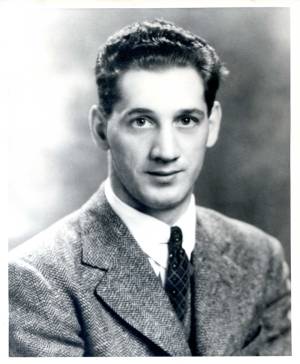
| Cpl. Norbert F. Simon 1918– 1944 United States Army 4th Infantry Division Rolling Four (4" Mobile Howitzers) Omaha Beach |
Pvt Michael S. Parise |